In September 2005 I started the blog Tabsir (“Insight”) with several other colleagues to provide information on the Middle East as a supplement to the news and to note items of interest. The blog has been in hibernation since late 2018 as I simply had no time to keep it going. I am reviving the blog for posting items time to time and hope to involve several other academic colleagues as well.
The Bathroom

by Reem Jazim
It is perfectly ordinary to feel like taking a shower or relaxing in a bathtub: you fill the tub with warm water and sink into it. For Yemenis—and especially for me—this simple scene can feel almost like a dream.
At the beginning of the war, despite the devastation surrounding us, we Yemenis tried to keep living as normally as we could, holding on to the lives we had known before the war. But circumstances kept forcing us onto a different path.
When the war began, I had just gotten married. My husband and I chose an apartment close to his workplace, even though it did not have many of the features you might hope for in a home. In fact, it was a partially damaged apartment. The walls of the kitchen and bathroom were cracked and partly broken as a result of the explosions caused by airstrikes. The landlord had promised to repair them, but that never happened.
When we rented the apartment, I was actually happy about the idea of fixing it myself and creating romantic memories there with my husband. Its greatest advantage was its location: it was close to where we worked.
But I soon lost the reason that had made me willing to overlook everything else. I could no longer stay at my job. Most of the embassies funding the projects of civil society organizations had withdrawn from Yemen just weeks before the war began, and many employees were laid off.
Still, we could not leave the apartment. Large numbers of people were being displaced within the city, and the collapse of the currency had sent rents soaring. Fortunately, our landlord did not raise our rent by much. He knew very well that his apartment was almost falling apart, and that no one else would agree to rent it for much more than what he was already charging us.
Then the war began taking away the things we had once taken for granted.
Water and electricity were cut off. Gas, oil, and gasoline became difficult to obtain. People had to find ways to provide these basic necessities for themselves.
The apartment still had one feature I considered a luxury: the bathroom had a bathtub.
After a long, exhausting day, I would imagine filling it with warm water and relaxing, or simply taking a refreshing shower. Instead, the bathtub became a reminder of what we could no longer afford to take for granted.
The water crisis had existed in Yemen long before the war, but the war made it much worse. We became completely dependent on what we Yemenis call white water: trucks carrying large tanks of water from wells and delivering it to the tanks on the rooftops or in the yards of our homes, for a fee.
Even the price of bottled water increased because of the rising cost of fuel needed to pump and transport it.
Our apartment’s water tank was tiny—only 500 liters—so every drop had to be used carefully. Filling a bathtub with water was an unimaginable luxury under those circumstances. And without electricity, things became even harder because we could no longer rely on electric water heaters to warm the water.
Before the war, electric water heaters were how we heated water. Yemen’s mountainous and desert regions can be surprisingly cold, with dry winters and rainy summers. When public electricity became unreliable or unavailable, Yemenis turned to solar energy instead.
I remember once watching a documentary about solar energy and learning that Japan was one of the countries leading the way in using it as an environmentally friendly alternative. I remember thinking that a country like Yemen would never turn to such technology. Yemen was not a developed country, and environmental concerns were hardly a priority.
I was completely wrong.
Yemen developed a huge market for imported solar panels and batteries, and Yemenis became remarkably knowledgeable about the technology. People learned to calculate watts and amps and figure out which electrical appliances could run on solar power and how to make their systems as efficient as possible.
But solar panels and batteries were expensive, and not everyone could afford them. And even those who could afford a system often could not afford one large enough to provide electricity throughout the entire day.
In our home, the electricity would surrender every night at around ten o’clock. After that, we would spend the rest of the night without power. On cloudy days, the system might give up much earlier—around four or five in the afternoon—when the sun could no longer prove its worth.
Private companies eventually began providing electricity through privately run networks, but their bills were expensive. We needed them anyway, so we learned to be extremely careful about which appliances we used. The refrigerator, for example, became something we could no longer run regularly, as was the case for many Yemenis.
For cold water, we found another solution: solar water heaters. They worked beautifully, but they were expensive too.
One of my little dreams was to have a small solar water heater so that I could finally escape the daily struggle of bathing.
Until then, we used a large kettle that we kept specifically for heating bathing water. We would pour the hot water into a small bucket and mix it with cold water until the temperature was right.
I wished I could use the shower—even just once—and have both hands free while I bathed.
That was surprisingly difficult with a bucket. One hand had to pour the water over my body while the other did the washing.
Two years ago, I was very grateful that my husband managed to buy a solar water heater, and that particular struggle finally came to an end. We still struggle a little on rainy days.
The Wedding That Wasn’t Supposed to Wait
by Reem Jazem
In 2014, my biggest concern was when to get married.
I was engaged in August, and my fiancé and I planned to have our wedding in May 2015. I wanted March instead. We were both born in March, and three had always been my lucky number, so a March wedding seemed almost too perfect to give up.
Unfortunately, he was going to spend three months filming a television series, so May won.
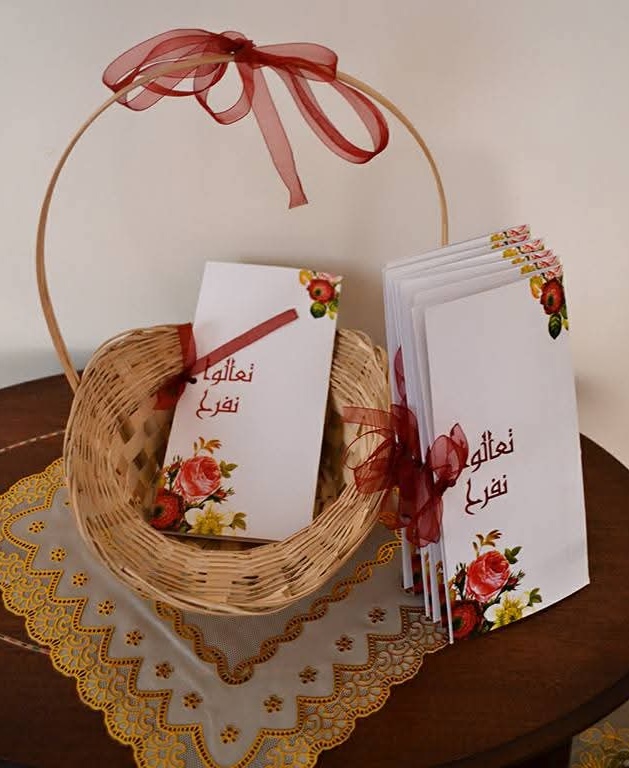
I was not planning a big wedding. I wanted something simple so that we could spend more of the money on our honeymoon. We were choosing between Turkey and Socotra Island, and my friends and I spent our time looking for a dress, a wedding hall, invitation cards, and all the other things that suddenly become extremely important when you are a bride.
Life was ordinary.
That is probably the best way to describe it.
We had plans. We had dates. We made decisions based on what would happen next month, or next summer, or after the wedding. We assumed that tomorrow would be there when we reached it.
I had never thought much about how extraordinary that was.
In Yemen, preparing for a wedding is not exactly a small task. Traditionally, the groom provides the agreed dowry, while the bride and her family carry many of the wedding expenses. The bride is also expected to prepare new clothes and gold jewelry for herself.
Men, I often thought, were lucky.
They put on a suit and show up.
The bride, meanwhile, could spend months preparing for a single day.
At the time, these were the problems occupying my mind.
Then came March.
Because we could no longer have our wedding that month, I decided that at least we could celebrate our birthdays together. On March 17, my colleagues surprised me with a birthday party at work. I remember that day clearly. Even my serious, strict manager danced Lahji.
At some point that day, I told my fiancé that I had a strange feeling that it would be my last birthday.
I had no reason to say it.
A week later, on March 26, I was at home chatting with friends on WhatsApp while my parents watched television.
Then came the explosion.
It was so loud that the house shook.
My father changed the television channel, and the news announced the beginning of the Saudi-led military intervention in Yemen against the Houthis.
Until that moment, the future had been something I could schedule.
After that night, it became something I could only wait for.
The airports closed. Traveling became difficult. Businesses and projects stopped. Buildings were damaged and people were killed. Things that had once been simple—getting somewhere, buying something, planning a trip, making a living—suddenly required calculations, luck, and sometimes could not be done at all.
We postponed everything.
The wedding. The honeymoon. The plans that depended on a life returning to normal.
We assumed the war would end.
So we waited.
Then we realized that waiting could not last forever.
The wedding finally took place in October.
The war did not.
By then, we had learned something that people living through ordinary times rarely have to learn: life does not always wait for the world to become normal again.
Sometimes you postpone your plans for a few months, expecting the interruption to end.
And then the interruption becomes the landscape of your life.
The war continued far beyond October, far beyond what we had imagined, and eventually far beyond what we could have imagined in our worst nightmares.
Looking back, I think about that girl who was worried about whether she would get married in March or May.
She thought she was choosing a date.
She did not know that history was choosing one for her.
On the Wehr dictionary
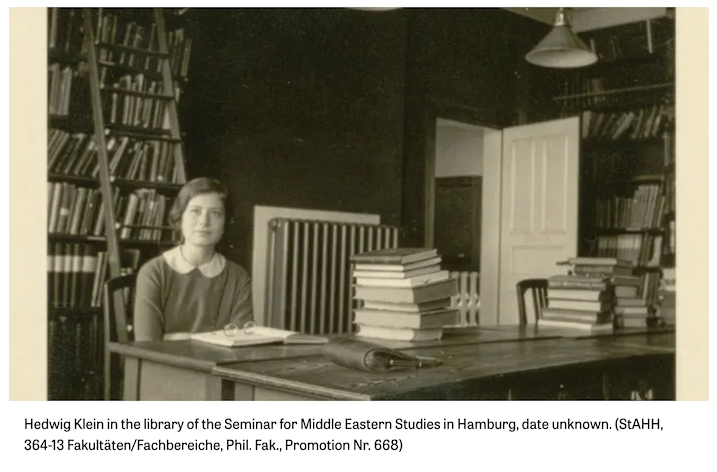
This is a fascinating history of a Jewish scholar who worked on the Wehr Arabic dictionary.
Wolves in Sheep’s Clothing
This post has been published in Informed Comment.
On Sunday, May 17, a conservative religious group known as Freedom 250 is inviting you to a prayer vigil at the National Mall. This is called Rededicate 250: A National Jubilee of Prayer, Praise & Thanksgiving. The goal is to “prepare for the nation’s 250th birthday with Scripture, testimony, prayer, and rededication of our country as One Nation to God.” Freedom 250 was created by the National Park Foundation to work alongside the White House Task Force 250, which is a child of Project 2025. The chief architect of that project is Russell Vought, who now serves Trump as Director of the Office of Management and Budget.
Although it is advertised for “Americans of every background,” there is an immediate link on their website to register your church to join the event, even a “Church Engagement Toolkit.” Looking over the list of speakers, it is obvious what kinds of churches are behind this event: mostly Evangelicals and especially Baptists. This includes Jonathan Falwell, the Senior Pastor of Thomas Road Baptist Church and Chancellor of his father Jerry Falwell’s Liberty University. Jonathan replaced his brother Jerry Falwell, Jr., who resigned after a sex scandal. There are also charismatics, including Paula White, a spiritual advisor to Trump who seems to know more about glossolalia than the Gospels.
There are two Catholic bishops, one of whom is the conservative Catholic Timothy Dolan, who Pope Leo recently replaced as Archbishop of New York. A Black senator and a Nigerian singer are also part of the show, but no major African American pastor was invited. I did not find any speakers from the mainline Protestant sects, including Episcopals, Lutherans, Methodists, Presbyterians and United Church of Christ. Nor are there any Latter Day Saints or Jehovah’s Witnesses. The only Jewish speaker is Orthodox Rabbi Meir Soloveichik, who offered prayer at the last Republican convention. There are no Hindu or Sikh speakers.
Not only are there no Muslim speakers, but one of the main stars is Franklin Graham, who has made his father Billy Graham’s Foundation an ultra-conservative political tool. Graham’s vitriolic hatred of Islam has a long history, including calling it a “a Very Evil and Wicked Religion.” Graham not only supports Trump’s war on Iran, but has the delusion that “the church in Iran is among the fastest growing in that part of the world.” He insists that more Iranians have become Christians in the last two decades than the entire 1,300 years since Islam arrived in Persia. At last year’s Pentagon Christmas Worship Service, Graham told the military personnel assembled that God is not just about love, but also a God of hate and war.
Featured as a main speaker is Pete Hegseth, identified as the 29th United States Secretary of War. Actually, since we have not had a Department of War since 1949, this number is off. Hegseth has promoted the war in Iran as a Christian duty with God on our side. This echoes the call of his religious advisor, Douglas Wilson, who argues that America should be a Christian nation and Christianity should dominate the world. Wilson also thinks women should not be allowed to vote, nor be in the military. Although it is not clear what kind of prayer Hegseth will ask for in his talk, he will probably not ask forgiveness for his previous adultery and drunken behavior.
I grew up in a small Fundamentalist Baptist church in northern Ohio, where my father often led the Wednesday night prayer service. I heard lots of sincere prayers from the elders, but none calling for God to kill someone. We were told that God hated sin, but Jesus died so that sinners do not need to be killed. They would be judged by God. It was common practice to pray for the American President, no matter which party he came from. This small church supported two local missionaries, who went to India and Africa to save souls, not to judge them.
Every once in awhile there was an Evangelistic Service in which we were told to invite our unbeliever, i.e. not Baptist, friends so the Holy Spirit could convict their hearts when a Bible verse was read. This has been the teaching of Fundamentalists and Evangelicals for a long time. The proposed national prayer vigil is a politically glorified evangelistic service by ultra-conservative Christian Nationalists. It is not going to be a prayer ritual for peace, justice or tolerance. The special message that will be read by Trump, who apparently will not attend in person, will have been written by an aide for a man who has never read the Bible and certainly has no desire to do so.
There is a scriptural passage which well defines this national display streamlining Sunday across the country: “Beware of false prophets, which come to you in sheep’s clothing, but inwardly they are ravening wolves” (Matthew 7:15, KJV). There are many different kinds of sheep in our country, both those who are religious and those who do not belong to a formal religion. A good shepherd, the kind that anyone who recites Psalm 23 knows by heart, is one who protects all the sheep, not just a select few. That is the founding principle of the United States: a separation of church and state that prevents the state from defining which religion is best. Rededicate 250 is a non sequitor since our country has never been dedicated to a specific religious sect. Make no mistake, this call for Freedom is not about being free to worship or not worship who you please.
Sunday’s call for prayer is clothed in religious rhetoric, but there is nothing sheepish about it. A good shepherd knows that wolves want to devour the sheep. The whole point of Sunday’s state-sponsored event is to promote a specific religious view that disenfranchizes the majority of American citizens. Evangelicals, not all of whom support Trump, represent less than a quarter of the population. The goal is to indoctrinate, not to provide a meaningful forum for the wide range of religious and spiritual views throughout our entire history as a nation. This event must be seen as nothing more than a wolf call for Christian Nationalism, ignoring one of the very reasons our country was founded to prevent this attack on freedom of and from religion.
Anthropology of Art: Tattoo, Healing and Armored Knight
el-Sayed el-Aswad
Anthropology of arts studies different forms of art in different cultural contexts. Rather than tackling merely the ethical and beatific aspects of arts, it examines how artistic forms, objects and performances represent cultural symbols, indigenous worldviews, social structures, political power, and national identities.
This article focuses on a sort of participation, connection and installation that blurs the line between the art of creative objects and the art of exceptional painting of creative objects. While John MacIntyre (an artist, armored knight and musician) represents the first, Liu Xiaodong (a renowned Chinese Neo-Realist painter) represents the second. As John sat as a subject of Liu painting, there developed a deep mutual artistic appreciation between both of them. As is shown below, the artwork signifies the spatiotemporalization of both the creative and painted objects.
In 2007, I interviewed John, tackling his work on tattooing that appeared in the essay of “Inscribing the Body: Tattoos in Traditional and Modern Cultures” in Tabsir: Insight on Islam and the Middle East (12/9/2007): https://tabsir.net/?p=409#more-409 as well as in AAA- Anthropology News (Middle East Section) 49 (4): 53-54. http://onlinelibrary.wiley.com/doi/10.1525/an.2008.49.4.53.2/epdf/
This is one of John’s latest innovative tattoo works:
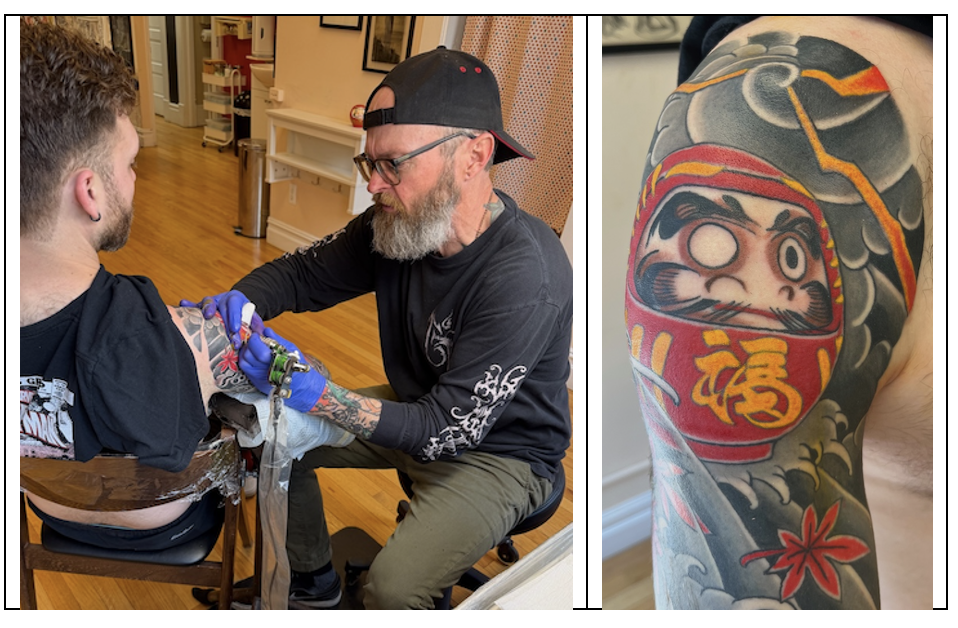
John Tattooing in Ann Arbor, MI (April 2026)
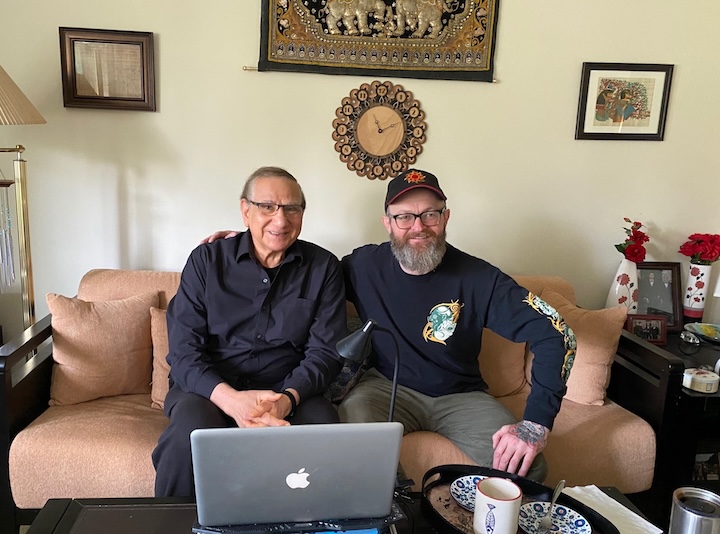
The Author with John (April 2026)
Life’s opportunities depend not only on who the individual is, but also on where the individual begins or grows up and continues his experiences. John was born in Coventry, England before coming to the USA. His early experiences provided him with the gift of intercultural communication and he has since participated in various international armored Knight combats in Denmark, Scotland, Czech Republic, and Italy. His team achieved a Gold Medal in Italy.
For almost 30 years John Macintyre has been practicing the art of tattoo both personally and professionally. In 2019 he moved from Los Angeles, where he was associated with the trendy LA Ink (TV Show) to Ann Arbor (Michigan) where he continued work as tattoo professional https://namebrandtattoo.com/john.
On July 30, 2022, I was invited by John to attend an armored knight competition (in Frankenmuth, MI) in which he was participating and enacting. According to John, the competition is known as HMB, Historical Medieval Battle, or Buhurt, derived from the French word béhourd that means ‘joust’ or ‘tournament.’ The picture, below, shows John resting after a long and challenging armored battle.
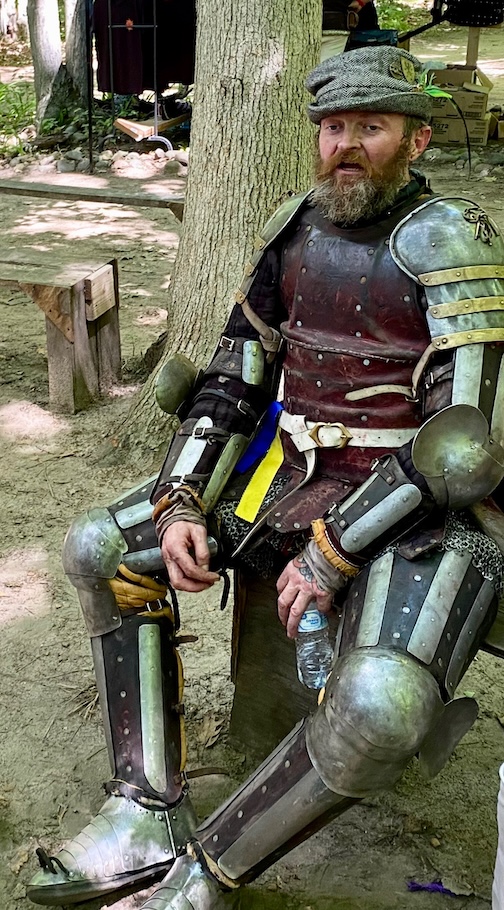
Resting Knight, John (July 2022)
On April 15, 2026, an art project, ‘Host’ (with reference to John) was launched at the Lisson Gallery (Los Angeles, USA. April 15 – June 13 2026) in which Liu Xiaodong was participating anthropologically or ethnographically in the painting of John’s artistic practices of tattooing and armored knight combating https://www.lissongallery.com/artists/liu-xiaodong.
The painting, entitled John and his Tattoos, represents John as a firm, muscular, and determined figure in both his face and body, particularly his right hand with a solid fist. It signifies cosmic-mythical symbolism with stars on the chest and fabled face on his belly.
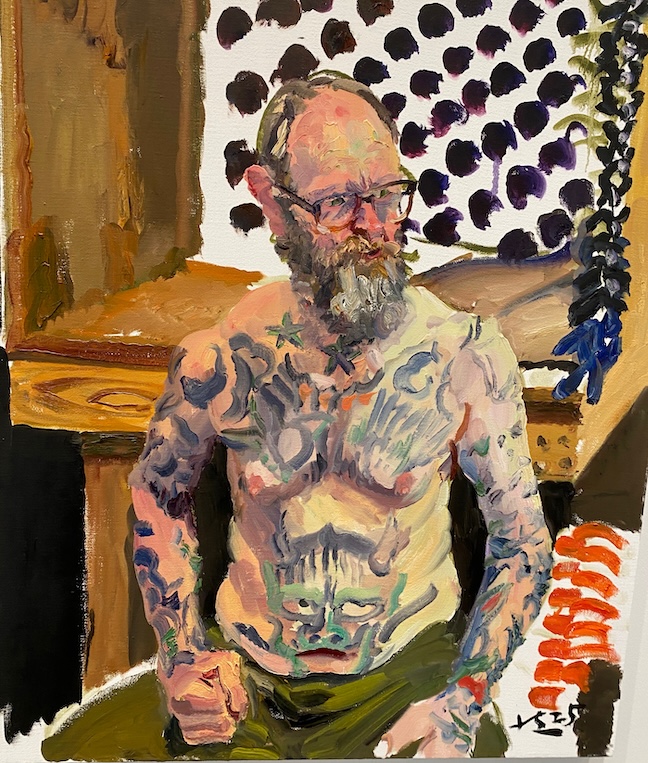
John and His Tattoos (2025)
One of Liu’s most impressive and beautiful paintings, called Ice clouds, depicts four knights (including John with his reddish-brown coat of plates) combating amidst snow and freezing ice. Here, the sport of armored knight competition signifies the culture of heroic hand-to-hand combat and related themes of strength, honor, warrior ethos, and sacrifice, as represented by dynamic, intense, ready-to-fight poses, and colorful high-contrast images of Medieval knighthood.
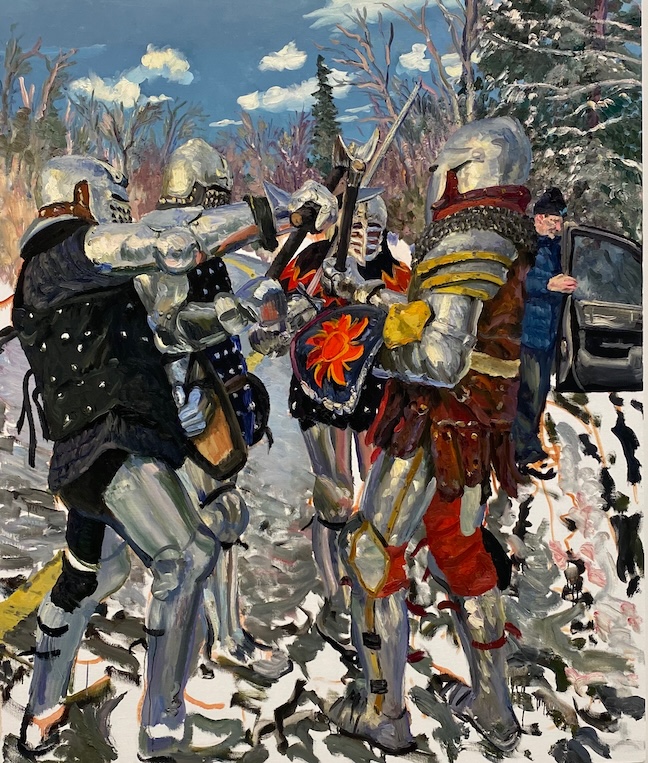
Ice clouds (2005)
As an anthropologist, I see the painting, Body, as representing an intense healing process in which John looks immersed in treating the patient. In a word, this remarkable painting reveals the profound compassion, the soothing practice of healing, the sensibility of the host-tattoo practitioner, the attentiveness of the guest-painter, the subjectivity and mutual experience of human affections, and culture-bound symbols, contextualized by the artists. For me, John was depicted as a doctor, mystic, saint, sage and philosopher descended from the archetypes of transformation.
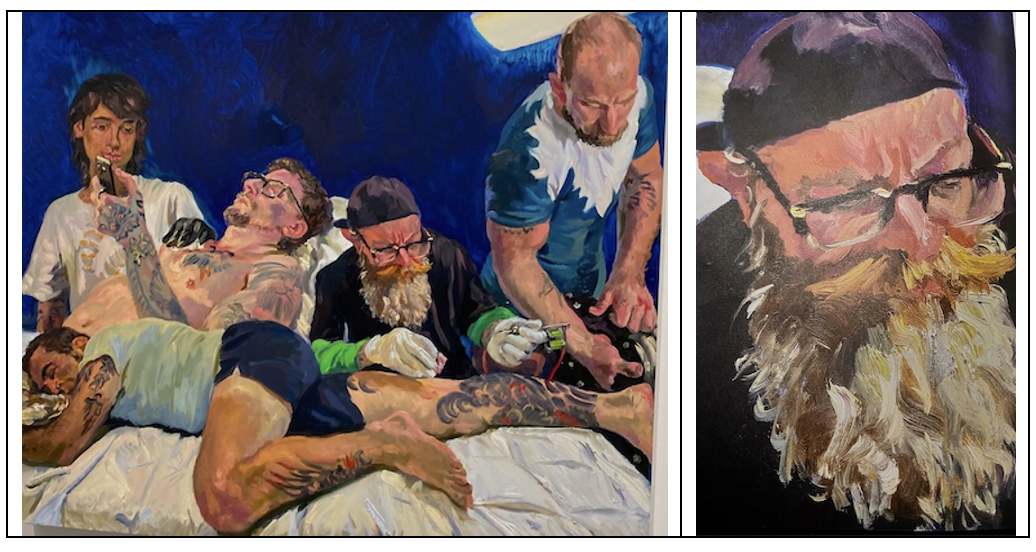
Body (2026)
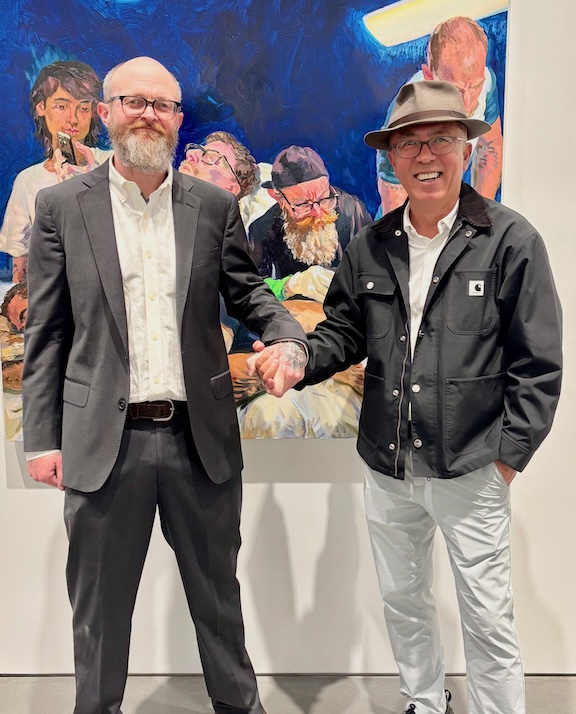
John with Liu Xiaodong
At the Lisson Gallery, there was also a documentary of John’s multiple artistic gifts including performing music (playing on guitar), which was not depicted in the painting, but a modified copy of his performance is shown here.
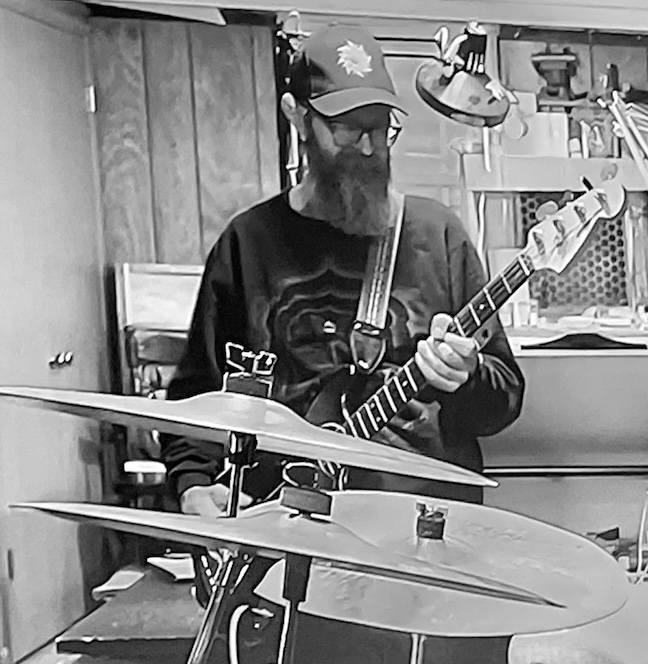
John playing the guitar
The art project, Host, successfully executed by a cooperative and innovative team led by Greg Hilty, Partner and Curatorial Director at Lisson Gallery, purported or intended to feature the city of Detroit, a city akin to the industrial region of Dongbei, Liu’s homeland. Th next step is to look for an initiative for future collaboration bringing together the artwork of both Liu Xiaodong and John MacIntyre within a platform potentially in both the Lisson Gallery and the Detroit Institute of Arts (DIA).
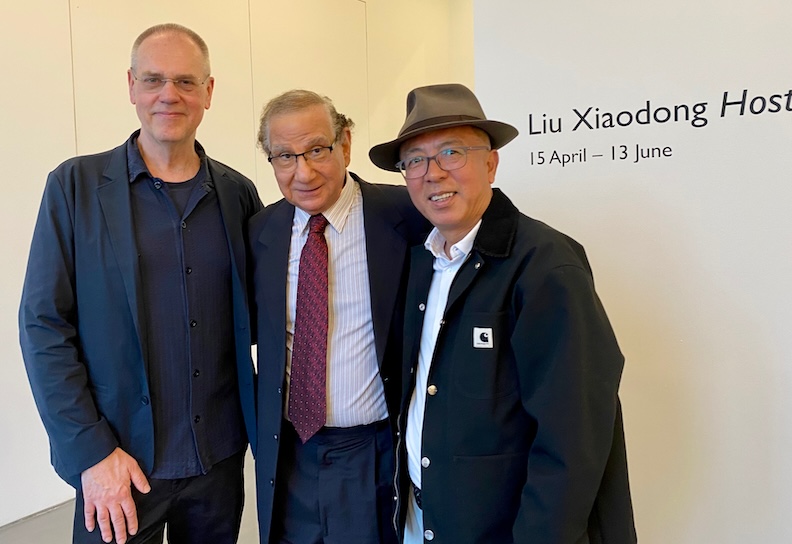
The Author (middle) with Greg and Xiaodong
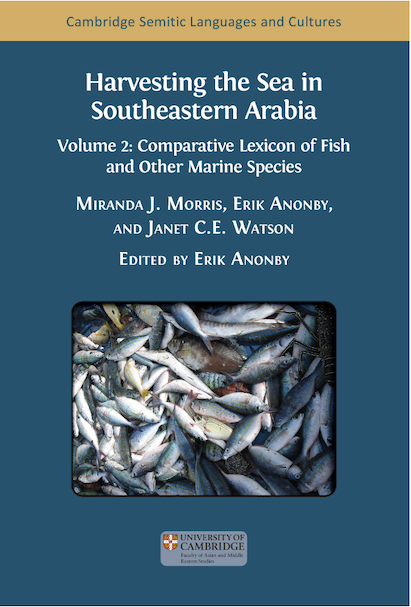
Lexicon of Fish and Marine Species
This is a new open book publication of terms in Arabic and contemporary South Arabian languages for fish and marine animals.
Digging in Arabia
A Visit to Yemen in 1884: Part 2
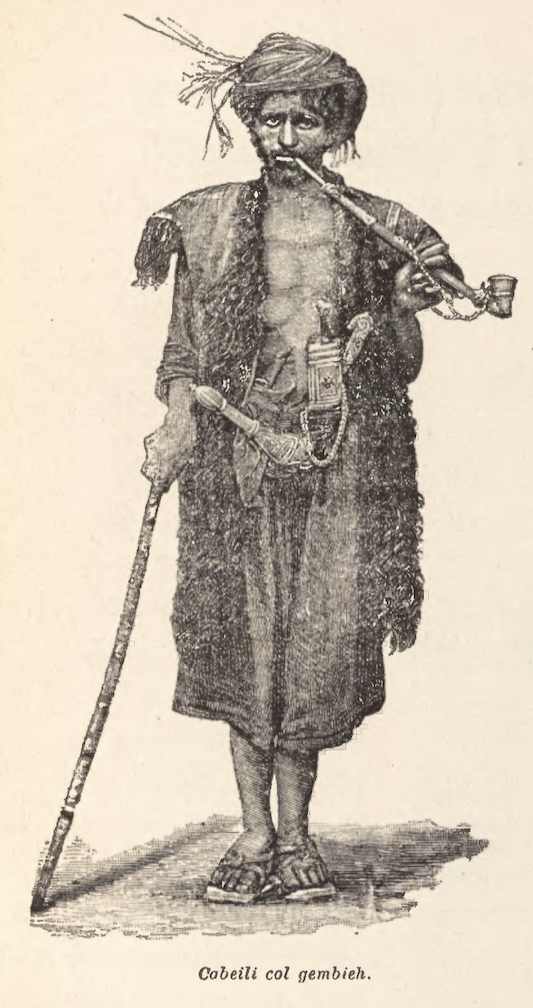
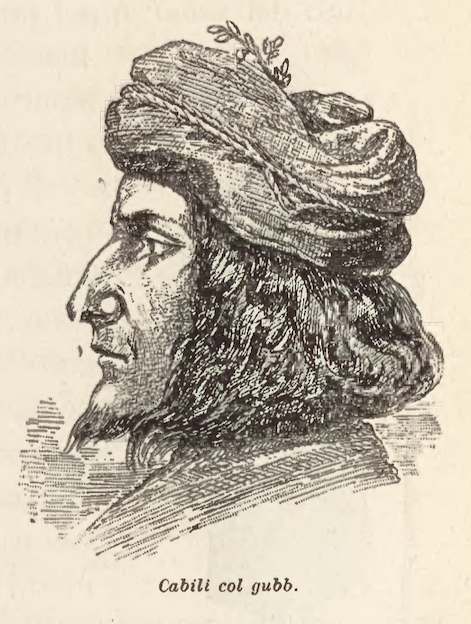
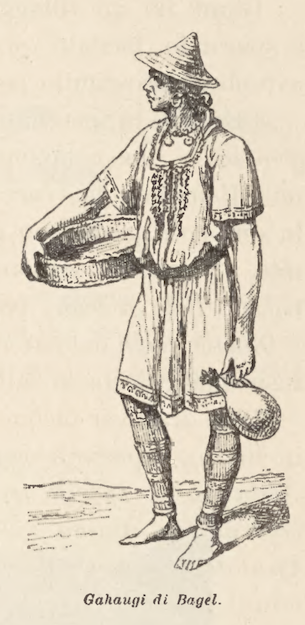
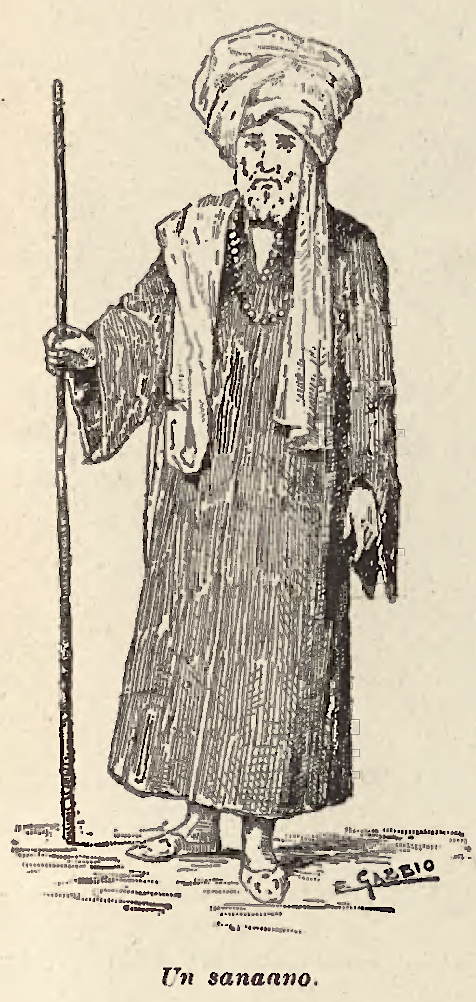
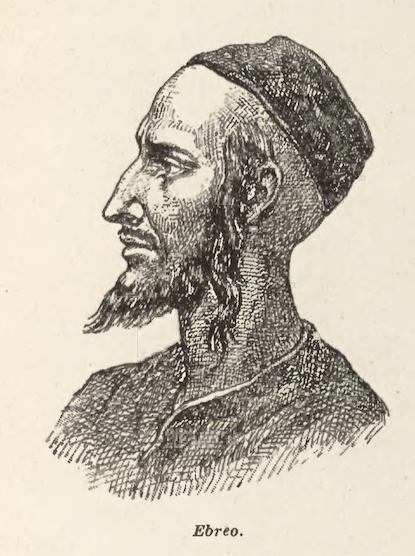
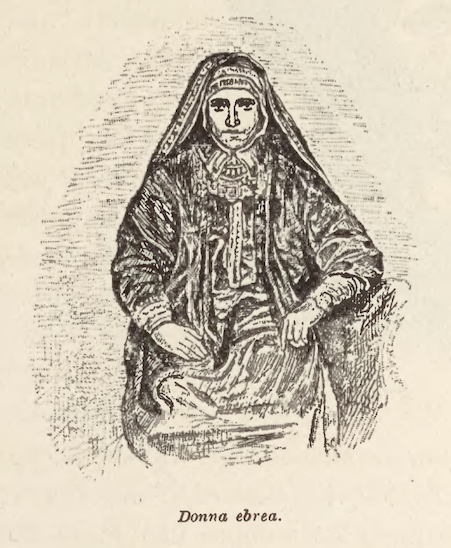
In a previous post I mentioned the visit to Yemen in 1891 by an Italian traveler after a journey that took him through Tunis and Egypt. His name is G. B. Rossi and his Nei Paesi d’Islam was published in 1897 with some 70 drawings. Here are some of the illustrations of Yemenis at that time: